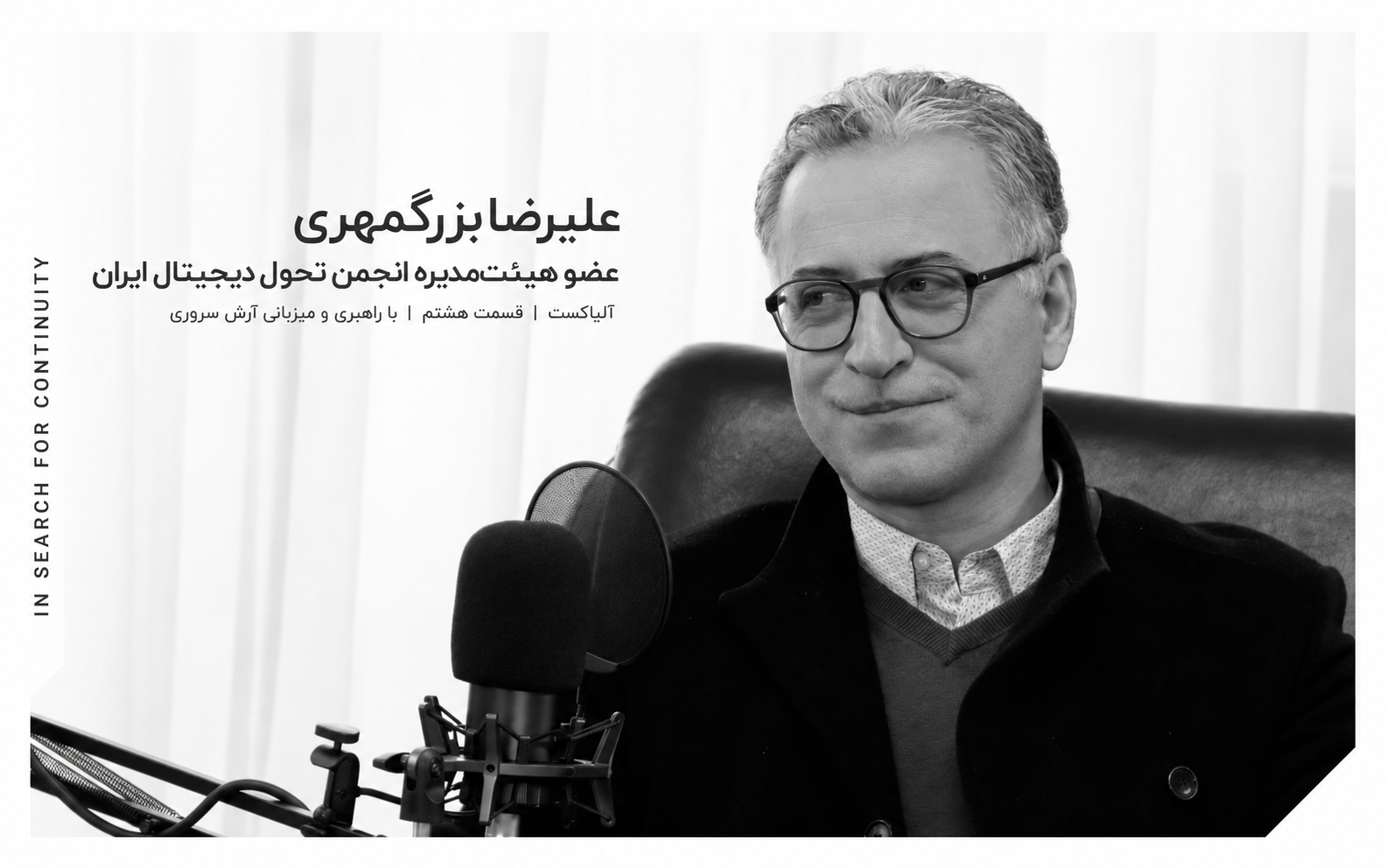
Bozorgmehri’s career began in information technology and enterprise projects in the early 1990s. Early work in networks, infrastructure and project management exposed a point that organizations often discover late: technology is not a collection of assets sitting beside the business. It is part of the mechanism through which the business delivers service.
Work on ERP, enterprise systems, Core Banking and banking technology deepened that perspective. The challenge in such environments is not simply to select or implement a solution. It is to understand the dependencies among data, infrastructure, software, contracts, operations and managerial responsibility; then to determine which service must be sustained or restored first when one of those dependencies fails.
Business Continuity Management has been an explicit part of his professional and educational work since around 2005, including BCM seminars and sustained attention to ITSM, ITIL, incident management, SLAs and service mapping. The record positions continuity as a business, technology and governance question, not as a recovery document to be opened after an incident.
Banking and electronic payments make that distinction more concrete. Where a disruption directly affects operations, customers and trust, service management depends on ownership, escalation paths, service commitments, dependency architecture and decision rights.
Education and knowledge transfer carry the same practical question into a managerial setting: what must an organization be able to see before it can make a defensible decision? The question separates familiarity with a standard from the ability to run a service.
In recent work, Bozorgmehri has focused on digital maturity, data governance, API governance, artificial intelligence and the move from ITSM toward Enterprise Service Management. The useful question is whether an organization can see, understand and act on an integrated view of the service.
SELECTED THEMES