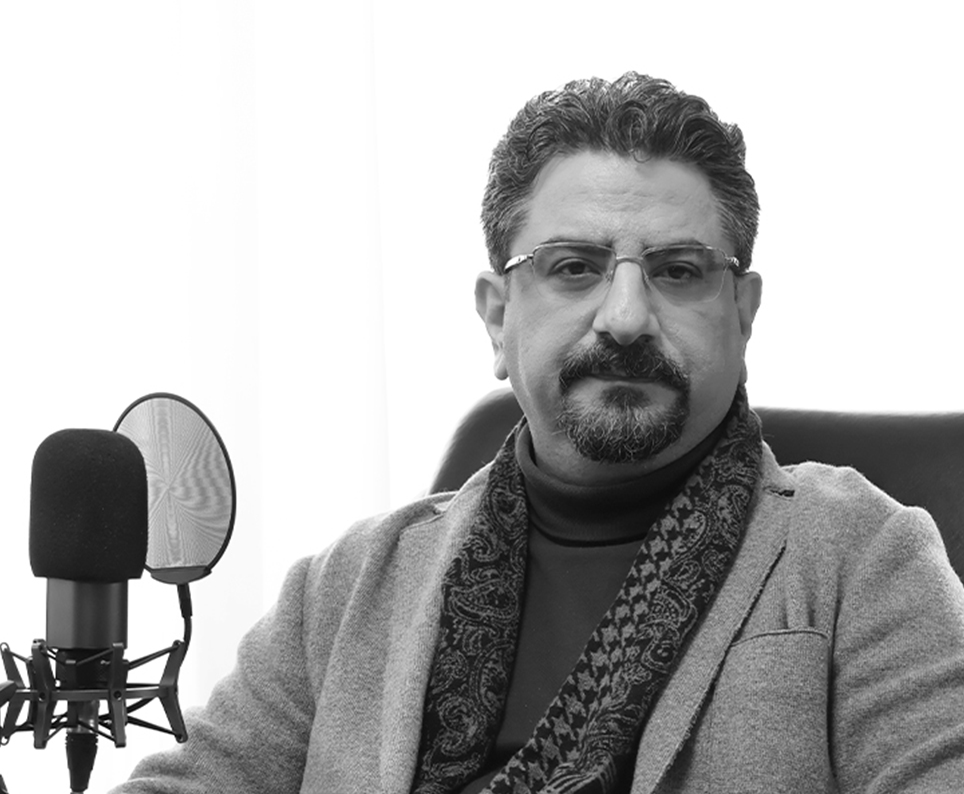
Sadegh Faramarzi

Board Member · Iran Management and Business Consultants Federation

Technocratic Leader

PaymentsDigital bankingBusiness turnaroundPainTechContinuity testing

Preparedness is not proven by documents or equipment. It has to perform under pressure.

Portrait of Sadegh Faramarzi

Continuity is not reducible to technology. Services, people, processes, suppliers, economics and decisions have to be tested as one design.

PROFESSIONAL ARC

From restoring terminals to restoring organizational capability

Faramarzi's career developed inside payments and electronic services, where technology, field operations, merchant networks, settlement, support and customer trust are tightly connected. Work at Sayan Card, Fanava Card and Day Electronic Commerce gave him direct exposure to commercial development and PSP operations before larger chief executive roles.

His tenure as CEO of Iran Kish, from 2014 to 2019, became a defining part of that path. The organization needed to rebuild its network, revenue path, team and market confidence at the same time. Turnaround at this level is not completed through one project or one cost reduction.

During the same period, a broad failure affecting one Hypercom terminal model removed a significant part of the network from service at once. Recovery required technical diagnosis, device collection from many locations, component supply, repair, redistribution and intense coordination among technology, operations and support teams.

No document could prescribe every behavior required during that disruption. Employees had to cooperate beyond ordinary role boundaries, move information quickly and recreate operating capacity in the field. Human capital became part of the continuity infrastructure itself.

After Iran Kish, Faramarzi developed PainTech, an approach for the moment when a business leaves its growth narrative and encounters genuine pain in the model, team, economics or regulatory environment. It attempts to make failure, decline and crisis diagnosable.

Leadership of Faraboom moved him into open banking and collaboration among banks and technology companies. APIs and banking-as-a-service create innovation capacity, but they also move the service boundary beyond one organization.

His later work across banking technology holdings, insurance technology and professional advisory keeps the transformation question practical: data, operating models, governance, processes and economic outcomes need to move together.

Faramarzi's relevance to House of Technocrats lies in the move from tools to capability. An organization may own backups, a second data center, procedures and vendor contracts, and still lack evidence that it can restore service under pressure.

SELECTED THEMES
Payments and PSP OperationsDigital Banking and Open BankingBusiness TurnaroundCrisis LeadershipPainTech and Failure LearningDigital TransformationInsurance Technology and DataRegulation and SandboxesHuman Capital and Continuity

CONTINUITY FIT

Where this experience meets Continuity

01

Test capability instead of trusting the asset

Backups, secondary sites and recovery documents do not prove restoration capacity. Restore, data integrity, team access, transfer time and rollback need practical testing.

Proactive Continuity EvaluationRecovery and Restoration Services
02

Treat human capital as response infrastructure

People execute the crisis plan in conditions outside normal job descriptions. Trust, dignity, knowledge and cooperation need to exist before disruption.

Continuity Governance
03

Convert pain and failure into usable knowledge

An incident that is only narrated keeps the conditions for recurrence. Lessons need ownership, remediation timing, review and retesting.

Continuity MaintenanceRisk Sensing, Threat Intelligence and Early Warning
04

Outsource delivery without outsourcing accountability

Collaboration with PSPs, banks, API platforms and technology suppliers may place part of the service outside the organization. It does not transfer responsibility for the outcome.

Third-Party and Partner ContinuityBusiness Process Continuity / SLA

SELECTED EXPERIENCE

A career moving from systems to service responsibilities

01

early career

Sayan Card, Fanava Card and Day Electronic Commerce

Payments and PSP operations

Built direct exposure to market development, merchant networks and operational service dependencies.

02

2014 to 2019

Iran Kish

Chief Executive Officer

Led turnaround under financial and operating pressure while rebuilding revenue, network, team and confidence.

03

Iran Kish period

Hypercom terminal-network restoration

Operational crisis leadership

Managed a shared failure mode through diagnosis, repair, redistribution and cross-team coordination.

04

after Iran Kish

PainTech

Failure-learning method

Turned decline, crisis and pain into diagnosable management input.

05

open banking phase

Faraboom

Open banking leadership

Connected APIs, banking-as-a-service and partner dependency to customer outcomes.

06

recent career

Banking technology and insurance technology

Technology holding and transformation work

Placed data, governance, operating model and economic outcome inside one transformation question.

07

current recorded role

Iran Management and Business Consultants Federation

Board Member

Carries crisis, transformation and continuity experience into professional advisory practice.

RELATED DBR DOMAINS

Where the profile connects to the Radar